
On this page: What Is eSIM Technology | How eSIM Differs from a Physical SIM | Benefits and Limitations | Carrier Support in the U.S. | How to Activate an eSIM | eSIM and Travel Use | Final Advice
What Is eSIM Technology
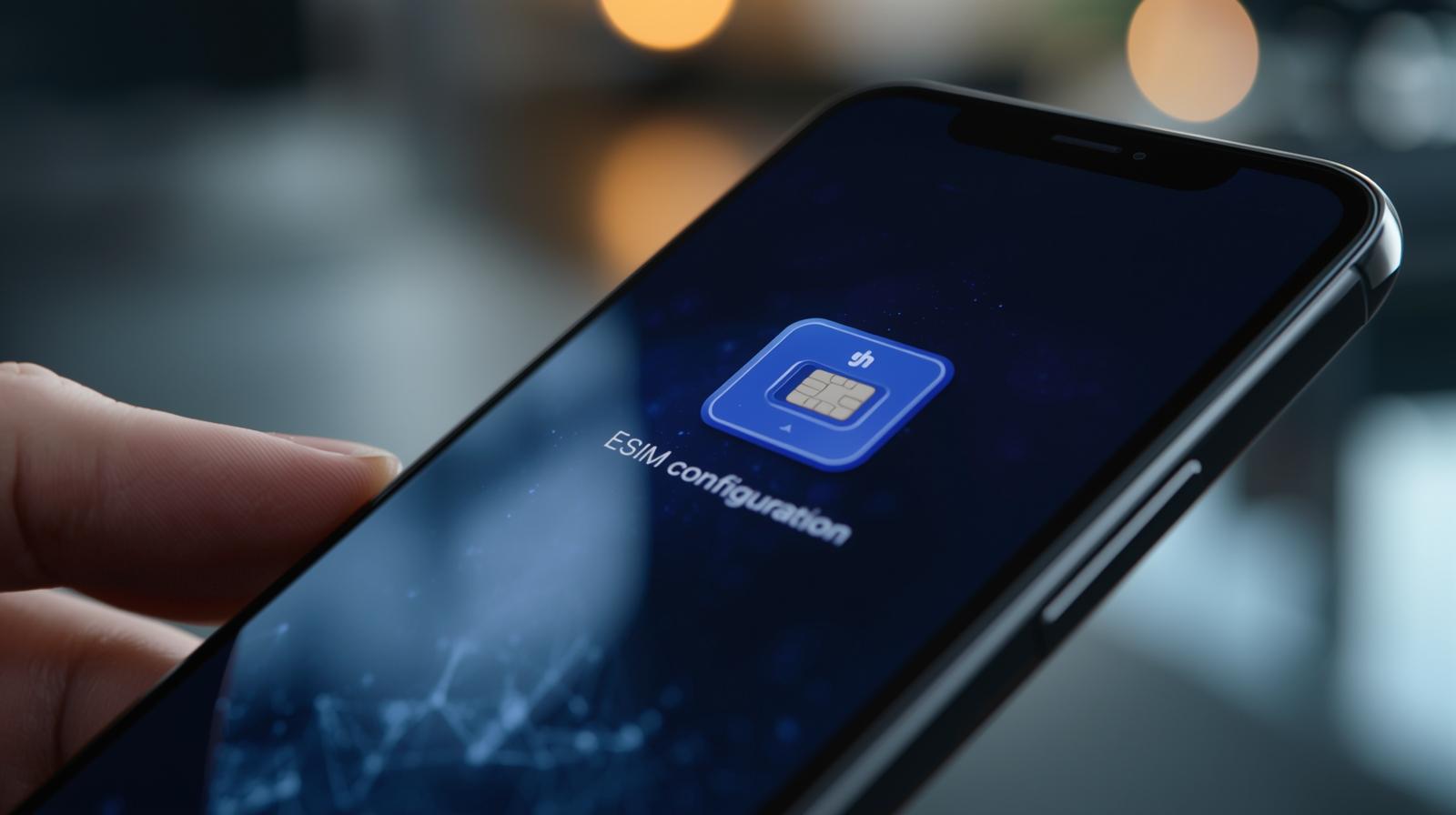
An eSIM (embedded SIM) is a digital alternative to the traditional removable SIM card. Instead of inserting a chip into your phone, the SIM information is stored directly inside a small, rewritable chip built into your device.
Unlike physical SIMs, an eSIM can be:
- Activated remotely by scanning a QR code or using a carrier app
- Reprogrammed to switch carriers instantly
- Used to store multiple profiles for personal and work numbers
In simple terms: an eSIM gives you the same connectivity freedom but removes the plastic card entirely.
How eSIM Differs from a Physical SIM
| Feature | Physical SIM | eSIM |
|---|---|---|
| Form Factor | Removable plastic card | Embedded microchip |
| Setup | Insert manually | Activated digitally |
| Multiple Profiles | One per card | Up to 8 (varies by phone) |
| Swapping Carriers | Requires new SIM | Instant remote reactivation |
| Durability | Can wear out or lose contact | No physical wear |
Example:
If you travel abroad, you no longer need to find a local SIM vendor. You can purchase a temporary eSIM plan online, scan a QR code, and connect within minutes.
Benefits and Limitations
Key Benefits
- Convenience: No more swapping SIM cards or losing adapters.
- Security: Harder to steal or clone since it’s embedded in the device.
- Dual Profiles: Manage personal and business numbers on one phone.
- Eco-Friendly: Reduces plastic and packaging waste.
- Instant Carrier Switching: Perfect for frequent travelers or deal hunters.
Main Limitations
- Limited Carrier Support (still expanding): Some smaller MVNOs in the U.S. haven’t adopted full eSIM support.
- Complex Migration: Moving your number to a new phone may require carrier intervention.
- No Physical Backup: If your phone breaks or battery dies, transferring your line takes extra steps.
- International Compatibility: Not all global networks support eSIM yet.
Carrier Support in the United States
All major U.S. carriers now support eSIM activation — though ease of use and compatibility still vary.
| Carrier | eSIM Availability | Activation Process | Notes |
|---|---|---|---|
| AT&T | Yes | Via AT&T app or QR code | Supports iPhone, Samsung, Pixel |
| Verizon | Yes | My Verizon app or web activation | Allows dual-line eSIMs |
| T-Mobile | Yes | T-Mobile app or store | Fastest eSIM provisioning |
| Google Fi | Yes | Automatic for Pixel devices | Great for travelers |
| Visible, Mint, Cricket | Partial | QR code/manual | Works best with unlocked phones |
Pro Tip:
If you’re buying an unlocked phone, ensure your chosen carrier supports BYOD eSIM activation. Some prepaid plans still require a temporary physical SIM for setup.
How to Activate an eSIM
Activation is usually simple, but it differs slightly by carrier:
- Check compatibility: Confirm your device supports eSIM (most 2020+ iPhones, Pixels, and Samsung models do).
- Request an eSIM activation code: From your carrier’s website or app.
- Scan QR code: In your phone’s “Cellular/Network” settings.
- Label and set default line: Choose which number to use for data, calls, or texts.
- Test connection: Place a call or open a browser to verify service.
Example:
On iPhone: Settings → Cellular → Add eSIM → Use QR Code.
On Android: Settings → Network & Internet → SIMs → Download a SIM.
eSIM and Travel Use
One of eSIM’s biggest advantages is its flexibility for international travelers.
Instead of juggling SIM trays at the airport, you can:
- Buy a regional or global data eSIM plan (like Airalo, Nomad, or GigSky).
- Activate instantly by scanning a QR code.
- Keep your U.S. number active for calls/texts while using local data abroad.
Table: Example eSIM Providers for U.S. Travelers
| Provider | Region Coverage | Avg. Data Plan Price | Activation Method |
|---|---|---|---|
| Airalo | Global | $10 for 3GB/30 days | QR code |
| Ubigi | North America, EU | $9 for 2GB/30 days | App download |
| GigSky | Global | $15 for 5GB/30 days | In-app |
| Nomad | Asia, U.S., EU | $7 for 1GB/7 days | QR or app |
Travel Tip:
Ensure your phone is unlocked before travel — locked phones can’t download or switch eSIM profiles from another carrier.
Final Advice
As Apple, Google, and Samsung lead the eSIM-only transition, especially in the U.S., buyers should start preparing now. The convenience, security, and sustainability benefits are clear — but so are the setup challenges.
If you switch carriers often, travel abroad, or want a cleaner, more secure mobile setup, eSIM is worth adopting now. For traditionalists who prefer physical SIMs, this might be the last generation where they’re widely available.
Last technically reviewed on October 26, 2025.
How we created & reviewed this content:
The content in this article has been gone through our editorial process and currently reliable.
DISCLAIMER
MPT provides independent, fact-checked information about mobile technology for general reference only and images on this site maybe AI-Assisted where appropriate and relevant. See our Disclaimer for details.
INFORMATION SOURCES
MPT follows strict sourcing standards, relying only on credible, verifiable data from manufacturers, industry benchmarks, and reputable publications. Learn more about how we ensure content accuracy and transparency in our Editorial Policy.
- Apple Support – How to Transfer or Activate an eSIM on iPhone
- GSMA – eSIM Consumer Guide
- T-Mobile – Set Up eSIM on Your Phone
- Verizon Support – eSIM Activation and Compatibility
- AT&T – Using eSIM on Your Device
- Google Fi Help – eSIM Setup and Troubleshooting
- Airalo – How eSIM Works for International Travel
- Qualcomm – How Embedded SIM Improves Security
- Android Central – The Rise of eSIM Phones in the U.S.
- The Verge – Apple’s eSIM-Only iPhones and the Future of Connectivity
EDITORIAL HISTORY
Our team of writers, editors, and reviewers continually monitors the mobile industry and updates articles when new information becomes available. See how we maintain transparency and editorial integrity in our Editorial Policy.
- Current version
- Edited by Marucs Hill
- October 26, 2025
- Written by Emily Carter
- Edited by Marcus Hill
- Technically reviewed by Irene Park
DISCUSSION & FEEDBACK
We value reader insights and industry feedback to help us keep our content accurate and relevant. Learn how we handle reviews, corrections, and updates in our Editorial Policy.
- Leave a feedback on this post update at Reddit and Youtube.
CITE & SHARE IT
You’re welcome to cite and share MPT content for reference with proper attribution and a link back to the original article — helping more readers access trustworthy, well-researched mobile tech information.