
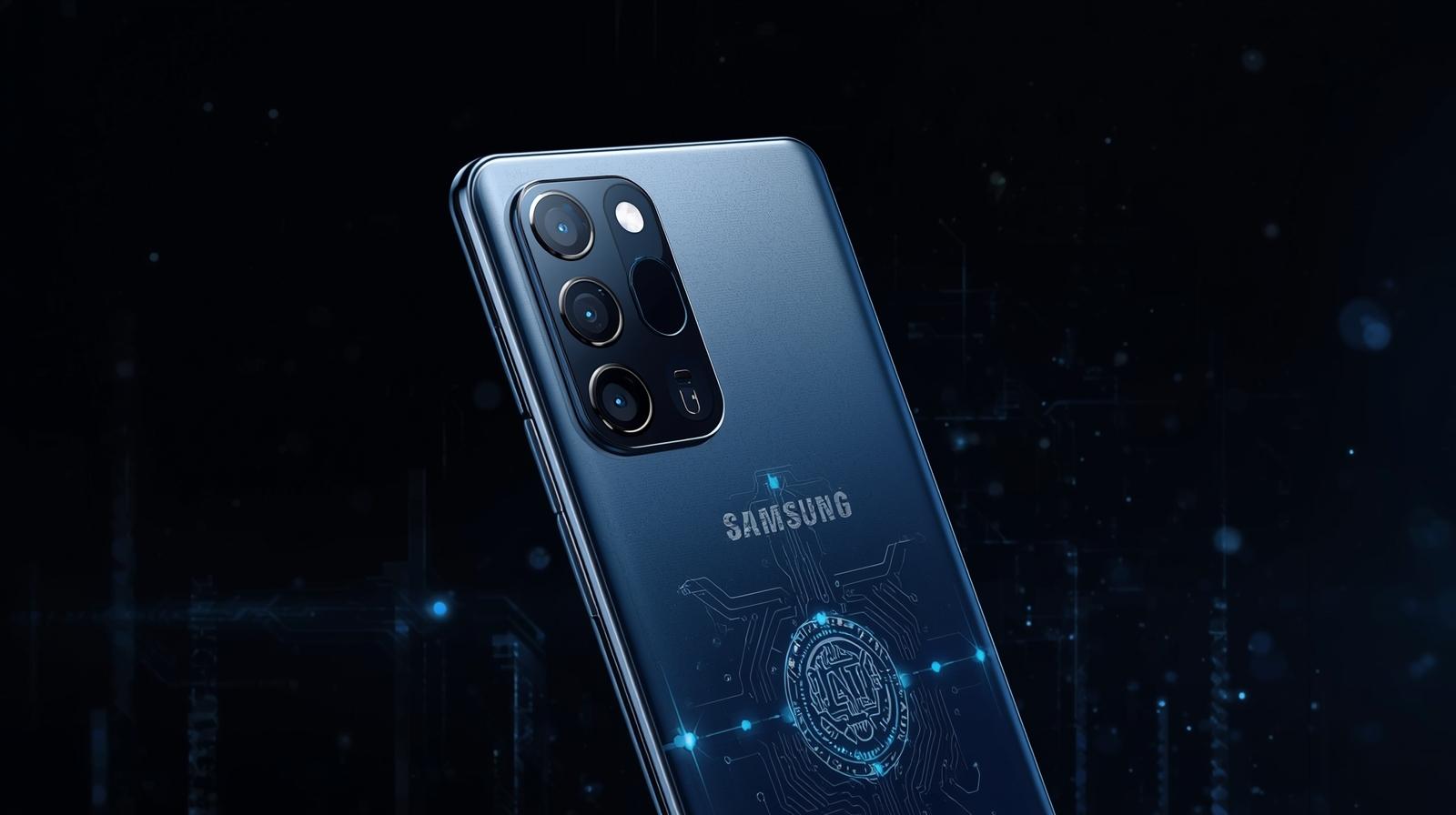
Samsung has just begun its pre-launch drumroll for the Galaxy S26 series — and while we’re still several months away from the official unveiling, this early peek is already shedding light on where the company sees its flagship line heading. During its Q3 2025 earnings call, Samsung’s Mobile Experience Division VP Daniel Araujo confirmed that the S26 series will deliver “user-centric, next-gen AI, a second-generation custom AP (application processor), and stronger performance, including new camera sensors.” Android Authority+2Beebom Gadgets+2
In this article we’ll unpack all of that: what each of those three major pillars (AI, chip, camera) likely means in real-world terms, how Samsung is positioning the device, and what to keep an eye on as we move toward launch.
1. Next-Gen AI: What Does “User-Centric, Next-Gen” Really Mean?
When Samsung says “next-gen AI”, this isn’t just the marketing kind of AI you’ve heard before — it signals an intensified focus across both hardware and software to make AI features feel more built-in, more seamless, and more useful in everyday use.
What we know so far
- Araujo explicitly cited “user-centric, next-gen AI” as one of the three main upgrades for the S26 series. Android Authority+2Tom’s Guide+2
- Samsung has already been building out its “Galaxy AI” suite in recent devices — and with the S26 we’re expecting that push to be stronger, and perhaps more deeply integrated into the device. Tom’s Guide+1
- Among rumours tied to the device are advanced camera AI, improved scene-recognition, enhanced image processing, and better on-device intelligence (rather than just cloud-based). Beebom Gadgets+1
What this could deliver
- Smarter camera software: Think smarter auto-modes, dynamic scene optimisation, faster processing of images/videos, potentially higher-quality output in low-light because the “AI layer” does more heavy lifting.
- Deeper system integration: Features like live translation, context-aware suggestions, smarter voice assistants, improved multitasking or split-screen support — basically, the phone anticipates what you want rather than relying solely on you tapping menus.
- Better performance efficiency: AI-assisted power management, predictive app loading, smarter background task handling — all of which could make the phone feel faster and more responsive.
- Edge AI / on-device intelligence: If the custom AP (see next section) is built with AI in mind, then tasks that previously required cloud might now happen on-device — meaning faster, more private, less reliant on connection.
What to watch out for
- Real-world benefit vs. “AI hype”: It’s one thing to say “next-gen AI”, another to deliver genuinely meaningful features that raise the bar.
- Software support: AI features often require continual updates; how long Samsung supports the device will matter.
- Hardware matching: If the AI features are ambitious, the rest of the hardware (battery, thermals, cooling) must keep up — else the features will feel constrained.
2. A Custom Chip: Samsung’s Own or “For Galaxy”?
One of the boldest parts of Samsung’s teaser is the claim of a “second-generation custom AP”. That suggests the S26 series will be powered by something more bespoke than a standard off-the-shelf chipset.
What we know so far
- Araujo again used the phrase “second-generation custom AP … including new camera sensors.” PhoneArena+1
- Reports suggest that in certain regions the S26 may be powered by Samsung’s own Exynos 2600 — a chip believed to be built on a 2-nm process. Beebom Gadgets+1
- Other regions (or higher models) may use a specialised “For Galaxy” edition of Snapdragon 8 Elite Gen 5 (or similar) — meaning Samsung is continuing its dual-chip strategy. Tom’s Guide
Real-world implications
- Performance leap: A 2-nm process chip (Exynos 2600) would increase efficiency, improve thermal headroom, and allow higher sustained performance — ideal for flagship tasks like high-resolution video capture, AI processing, gaming.
- Better integration: If Samsung builds an AP tuned specifically for the S26 (including camera, AI, connectivity), then you could see better synergy across the hardware stack.
- Differentiation: This move signals Samsung is more serious about owning the silicon path — arguably necessary if they want to keep pace with rivals like Apple.
- Potential regional variation: As with past Galaxy models, chipset distribution may differ by market — buyers in certain countries may get a different “flavour” of the chip.
Risks & caveats
- Manufacturing/availability: Cutting-edge chips are complex and expensive to produce; any delay or yield issues could impact launch timing or device cost.
- Real-world performance vs. benchmarks: A chip built for AI and camera might excel in certain tasks, but sustained performance, cooling and battery life depend on entire design.
- Fragmentation: If different markets get different chips, consumers may find varied performance and support lifecycles.
3. New Camera Sensors: Finally a Hardware Refresh?
Perhaps no area of flagship phones garners more attention than the camera system — and Samsung appears to want to update its hardware this time. The phrase “including new camera sensors” is meaningful because it implies more than just software tweaks.
What we know so far
- Samsung’s marketing language confirmed “new camera sensors” as part of the S26 upgrade. Tom’s Guide+2PhoneArena+2
- Leaks indicate that the telephoto camera may receive a notable upgrade: the rumored shift to a larger 1/2.55-inch, 12MP telephoto sensor across S26 models. TechRadar
- Additional rumours point to a possible 200-MP main sensor for the S26 Ultra model, and larger periscope/ultra-wide sensors. Indiatimes
What this means for users
- Better image quality: Larger sensors allow more light capture → better low-light performance, less noise, improved detail. A larger telephoto sensor suggests fewer compromises in zoom shots.
- More uniform upgrades: If all models (base, plus, ultra) get camera sensor upgrades (rather than only the ultra), then even the non-Ultra buyers benefit.
- Software + hardware synergy: When new hardware (sensor size, lens optics) combines with improved AI/image processing, you can get real visible gains (not just incremental).
- Higher expectations: Having had many years of minimal hardware changes in some models, this may signal Samsung is stepping up.
What to be cautious about
- Leaks vs. reality: Until Samsung officially confirms sensor specs, rumours remain just that.
- Image processing matters: A large sensor without optimal lens/ISP/processing may not always translate into big gains.
- Trade-offs: Larger sensors, advanced zoom mechanisms, more components may impact thickness, weight, battery life or cost.
4. Strategic Positioning & What Samsung Is Trying To Achieve
Putting together the three pillars above (AI, silicon, camera) also reveals a larger strategy from Samsung.
Why now?
- The global smartphone market is crowded. To stand out, Samsung needs meaningful hardware + software leaps, not just incremental updates.
- Rivals (Apple, Google, others) are pushing AI, custom silicon and camera upgrades aggressively — Samsung is positioning to keep pace or lead.
- The mention of “user-centric” AI suggests Samsung wants the S26 series to appeal broadly (not just camera geeks) — perhaps emphasising features relevant in markets like Pakistan (where mobile usage spans social media, photography, multitasking, value).
What customers/markets should watch
- Launch timing & price: With advanced hardware comes higher cost; whether Samsung maintains “flagship value” or increases price will matter.
- Regional chipset variations: As mentioned, different chips may mean different performance/support per region — buyers should check which version they’re getting.
- Post-purchase support: AI features and camera improvements often require sustained software updates — the length of support will impact longevity.
- Real-world experience vs. specs: Much of the value will come down to how these parts integrate in everyday use — from battery life to thermal behaviour.
5. Final Thoughts & What To Expect Next
In sum, Samsung’s recent tease for the Galaxy S26 series is one of the most substantial early hints we’ve seen — a bold claim for “revolution” rather than “evolution”. If delivered well, the combination of advanced AI, custom chipset and new camera sensors could make the S26 a standout flagship in 2026.
However, as always with leaks and teasers, the proof will be in execution. For buyers (including in Pakistan, where value, longevity, and ecosystem portability matter), here are key take-aways:
- If you’re upgrading from an older flagship (2-3 years old), waiting for the S26 could be worthwhile given the promised leap.
- If you’re buying today, current devices may remain excellent — S26 may push premium pricing.
- When S26 launches, compare regional variants (chipset, camera hardware, support) before purchase.
- Consider your priorities: if camera/AI/silicon matter most, the S26 might hit new heights; if you prioritise price/compact size/accessories, mid-range alternatives may still offer better value.
Stay tuned for more confirmed specs, launch date announcements, pricing details and in-depth reviews once the Galaxy S26 series hits the market.
Last technically reviewed on November 02, 2025.
How we created & reviewed this content:
The content in this article has been gone through our editorial process and currently reliable.
DISCLAIMER
MPT provides independent, fact-checked information about mobile technology for general reference only and images on this site maybe AI-Assisted where appropriate and relevant. See our Disclaimer for details.
INFORMATION SOURCES
MPT follows strict sourcing standards, relying only on credible, verifiable data from manufacturers, industry benchmarks, and reputable publications. Learn more about how we ensure content accuracy and transparency in our Editorial Policy.
- Samsung teases Galaxy S26 with next-gen AI, custom chip, and new camera sensors – Android Authority
- Samsung promises the Galaxy S26 with more AI, a custom chip, and new camera sensors – PhoneArena
- Samsung Galaxy S26 Series Confirmed to Arrive with Custom Exynos Chip and Better AI – Beebom Gadgets
- Galaxy S26 — Samsung just teased the 3 biggest upgrades ahead of launch – Tom’s Guide
- A major telephoto camera upgrade is rumored for all the Galaxy S26 models – TechRadar
- Samsung teases Galaxy S26 with next-gen AI, custom chip & new camera sensors – TechRadar
- Samsung promete un S26 con más IA, procesador top y nuevos sensores de cámara – Los40 (Spanish)
- Galaxy S26 rumored to make contactless NFC payments even easier at stores – Android Central
- Samsung Galaxy S26 Ultra camera tipped: Check out the expected launch date, specs & more – IndiaTimes
- ProVisual Engine – Wikipedia (context on Samsung AI imaging)
EDITORIAL HISTORY
Our team of writers, editors, and reviewers continually monitors the mobile industry and updates articles when new information becomes available. See how we maintain transparency and editorial integrity in our Editorial Policy.
- Current version
- Edited by Laura Stevens
- November 02, 2025
- Written by Christopher Adams
- Edited by Laura Stevens
- Technically reviewed by Jacob Lin
DISCUSSION & FEEDBACK
We value reader insights and industry feedback to help us keep our content accurate and relevant. Learn how we handle reviews, corrections, and updates in our Editorial Policy.
- Leave a feedback on this post update at Reddit and Youtube.
CITE & SHARE IT
You’re welcome to cite and share MPT content for reference with proper attribution and a link back to the original article — helping more readers access trustworthy, well-researched mobile tech information.