
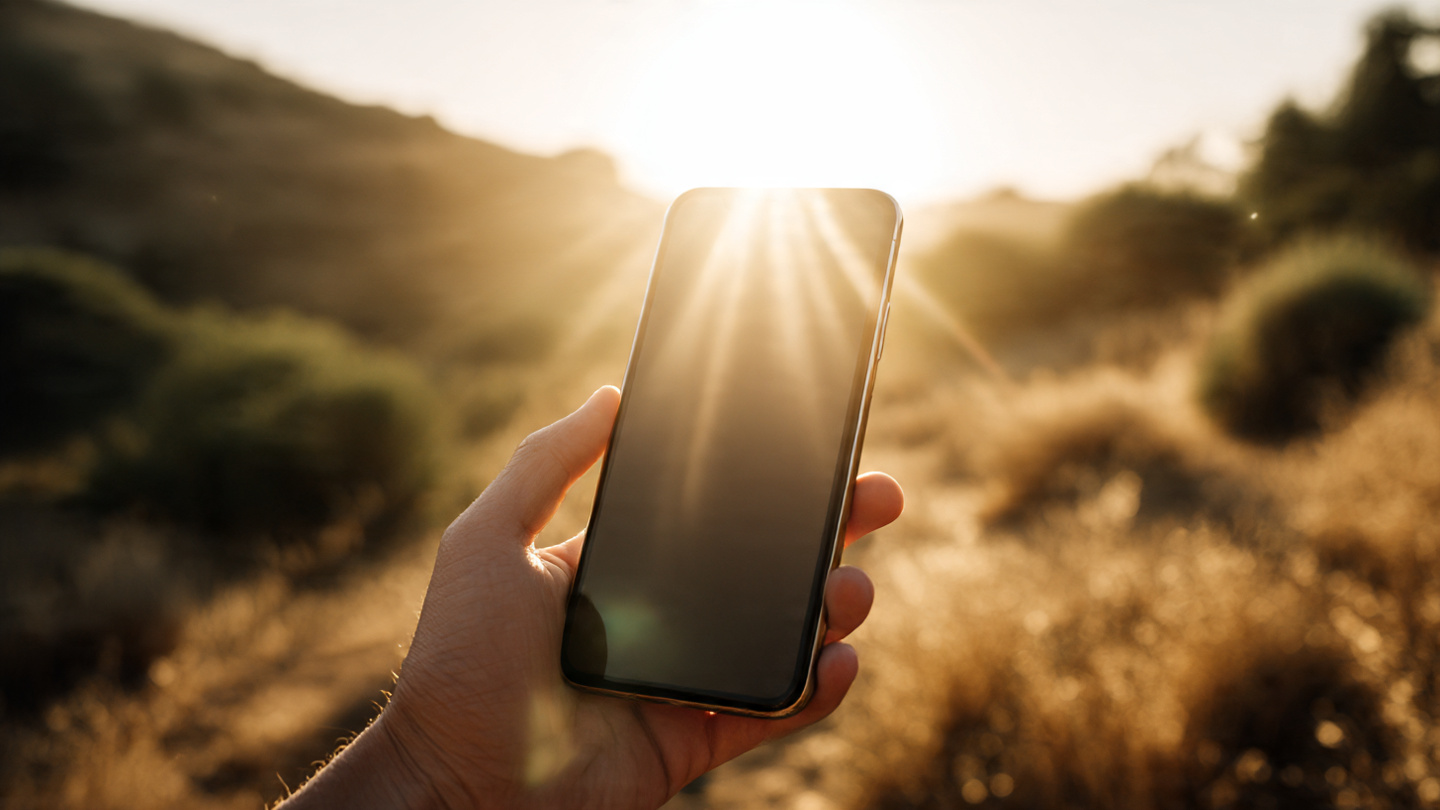
Have you ever stepped outside on a sunny day and suddenly couldn’t see what’s on your phone? You crank up the brightness, shield it with your hand, and still—barely anything. That’s the challenge of screen visibility under bright sunlight, and it’s one of the most underrated aspects of smartphone design.
As phone displays evolve, users demand more than vibrant colors and high refresh rates—they want real-world usability. The ability to read messages, use navigation, or watch content outdoors is a must in 2025, especially for those who travel, work on-site, or simply enjoy outdoor activities.
This comprehensive guide explains exactly what makes a screen sunlight-readable, what specifications to check before buying, and how you can spot the best phones for outdoor clarity.
On This Page
- Why Outdoor Screen Visibility Matters
- Key Features That Improve Sunlight Readability
- Understanding Display Specifications (in Table Format)
- Expert Buying Tips for Real-World Outdoor Use
- Quick Summary
- References
Why Outdoor Screen Visibility Matters
Outdoor readability isn’t just about convenience—it’s about real usability. Whether you’re navigating on Google Maps, responding to work messages, or capturing photos, sunlight can easily wash out the display.
A high-quality screen ensures you can see details clearly without squinting, which helps reduce eye strain and improves accuracy when using your phone outdoors.
In 2025, leading smartphone manufacturers have begun to prioritize peak brightness levels above 1,500 nits, anti-reflective coatings, and advanced OLED or LTPO panels to ensure you can see clearly in direct sunlight.
If you’re someone who works in construction, logistics, delivery, or even just enjoys photography and travel, investing in a phone with high sunlight visibility is more than worth it.
What to Look For: Key Display Features
Below is a breakdown of the most important specifications to check when evaluating a phone’s outdoor performance.
| Feature | Ideal Range / Specification | Why It Matters |
|---|---|---|
| Peak Brightness (Nits) | Minimum 1,000 nits; ideally 1,500–2,000 nits | The higher the brightness, the better your screen performs under direct sunlight. It allows the phone to outshine ambient light and maintain color accuracy. |
| Reflectance (Low %) | Below 4–5% | Even bright screens can fail if they reflect sunlight. Low reflectance ensures better clarity and contrast outdoors. |
| Display Type | OLED, AMOLED, or LTPO | These technologies provide deeper blacks and higher contrast, improving readability in challenging lighting. |
| Contrast Ratio | 1,000:1 or higher | High contrast makes dark and bright areas stand out, preventing the screen from appearing “washed out.” |
| Color Accuracy and Tone Mapping | Adaptive / True Tone feature | Adjusts color warmth and tone to match ambient light, maintaining natural visibility. |
| High Brightness Mode (HBM) | Supported | Activates extra brightness outdoors automatically, enhancing legibility. |
| Coating / Protection | Anti-reflective or matte finish, Gorilla Glass Victus+ | Reduces glare and surface reflections, while protecting the screen. |
| PWM Dimming Frequency | 480 Hz or higher | Prevents flicker under high brightness, reducing eye strain during prolonged outdoor use. |
| Display Refresh Rate | 120 Hz+ (secondary factor) | Smoother transitions help visibility when scrolling or navigating outdoors. |
Understanding Brightness and Contrast
Brightness is measured in nits, which represent the amount of light a display emits. Indoor use usually feels comfortable around 400–600 nits. But for direct sunlight visibility, you need at least 1,000 nits, and the best modern phones push that to 2,000 nits or beyond.
Contrast ratio determines how well the display distinguishes between bright and dark areas. A high contrast ratio ensures text, icons, and content remain clear, even when light floods the screen.
Tip: High brightness is useless without good contrast. A well-balanced combination of both gives the best results outdoors.
Display Technology: OLED vs. LCD
Both OLED and LCD technologies have their strengths, but OLED dominates in outdoor performance.
- OLED / AMOLED:
Each pixel emits its own light, allowing precise brightness control. This results in deeper blacks, higher contrast, and better color balance in sunlight.
OLED panels are also thinner and can support adaptive refresh rates (LTPO), helping with battery efficiency. - LCD (IPS, LTPS):
These rely on a backlight, so visibility depends on overall brightness and panel quality. High-end LCDs can still perform well if combined with good coatings and high nits.
Verdict: OLED wins in sunlight, especially with the latest HDR-capable panels used in flagship models.
Why Anti-Reflective Coating Is Crucial
Even with high brightness, reflections from glass can reduce readability. Modern phones use anti-reflective coatings or low-glare finishes to counteract that.
These coatings diffuse sunlight instead of reflecting it directly into your eyes, improving visibility and reducing smudges or fingerprints that worsen glare.
If you often use your phone outdoors, look for these terms in specifications:
- Anti-glare glass
- Low reflectance display
- Nano-texture coating
- Matte finish
Additional Tips Before You Buy
- Check outdoor brightness tests (from trusted reviewers). They measure real-world performance, not just marketing claims.
- Observe screen visibility from multiple angles. Some panels dim when tilted in sunlight.
- Compare adaptive brightness behavior. A smart ambient sensor ensures seamless transition when moving between indoor and outdoor environments.
- Evaluate power efficiency. Phones that maintain high brightness without overheating or rapid battery drain are better engineered for outdoor use.
- Consider eye comfort. High PWM dimming frequency (above 480 Hz) reduces flickering at high brightness, preventing headaches.
- Don’t overpay for refresh rate alone. A 120 Hz display doesn’t always mean better outdoor visibility—it’s secondary to brightness and contrast.
- Read the fine print. Some brands advertise “peak brightness” that only activates under limited conditions like HDR playback, not standard daylight.
Top Highlights to Remember
- Aim for 1,500 nits or more for direct sunlight performance.
- Choose OLED or LTPO displays for the best contrast and efficiency.
- Low reflectance coating is as important as brightness.
- High Brightness Mode (HBM) should activate automatically outdoors.
- Color accuracy keeps the display natural in varying light.
- Eye comfort features (low flicker, adaptive tone) are crucial for long outdoor use.
Quick Summary
Buying a phone with the best screen visibility in bright sunlight means balancing powerful brightness output, anti-reflective design, and strong contrast ratio.
A good display doesn’t just shine—it maintains clarity, readability, and comfort when light conditions change.
If you’re comparing smartphones in 2025, remember:
- OLED > LCD for outdoor use.
- Brightness above 1,000 nits is a must.
- Reflectance and coatings make a bigger difference than many realize.
- Adaptive brightness + color tone = effortless usability anywhere.
Whether you’re hiking, driving, or working under open skies, a sunlight-optimized phone ensures your display stays perfectly readable—no squinting, no glare, just clarity.
Last technically reviewed on October 28, 2025.
How we created & reviewed this content:
The content in this article has been gone through our editorial process and currently reliable.
DISCLAIMER
MPT provides independent, fact-checked information about mobile technology for general reference only and images on this site maybe AI-Assisted where appropriate and relevant. See our Disclaimer for details.
INFORMATION SOURCES
MPT follows strict sourcing standards, relying only on credible, verifiable data from manufacturers, industry benchmarks, and reputable publications. Learn more about how we ensure content accuracy and transparency in our Editorial Policy.
- DisplayMate Smartphone Display Technology Evaluation (2025)
- GSMArena Display Brightness and Sunlight Contrast Tests
- PhoneArena Brightness Benchmark Reports (2025 Edition)
- TechRadar Smartphone Display Comparison 2025
- Tom’s Guide Outdoor Screen Visibility Tests
- Android Authority Display Lab Results
- Consumer Electronics Display Trends Report 2025
- HowToGeek Smartphone Readability Analysis
- Counterpoint Research Display Technology Insights
- DXOMark Display Quality Benchmark 2025
- Display Supply Chain Consultants (DSCC) Brightness Index Report
- IDC Mobile Display Performance Study
EDITORIAL HISTORY
Our team of writers, editors, and reviewers continually monitors the mobile industry and updates articles when new information becomes available. See how we maintain transparency and editorial integrity in our Editorial Policy.
- Current version
- Edited by David Chen
- October 28, 2025
- Written by Ashley Turner
- Edited by David Chen
- Technically reviewed by Amanda Flores
DISCUSSION & FEEDBACK
We value reader insights and industry feedback to help us keep our content accurate and relevant. Learn how we handle reviews, corrections, and updates in our Editorial Policy.
- Leave a feedback on this post update at Reddit and Youtube.
CITE & SHARE IT
You’re welcome to cite and share MPT content for reference with proper attribution and a link back to the original article — helping more readers access trustworthy, well-researched mobile tech information.