
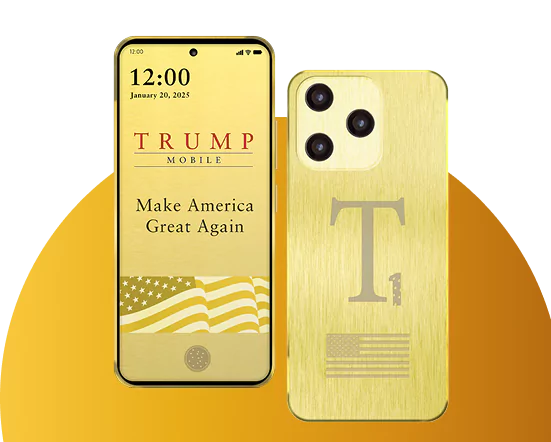
When a new smartphone enters the market, it often sparks curiosity — but when it carries the name Trump, the conversation turns into a full-blown spectacle. The “Trump Phone,” officially branded under Trump Mobile, has become one of the most discussed devices of 2025. It’s not just a gadget; it’s a political statement, a marketing experiment, and a symbol of how technology and branding can intertwine in unexpected ways.
In this detailed analysis, we’ll explore what the Trump Phone really is, what it offers, what’s uncertain, and what it represents for consumers and the tech industry.
The Birth of Trump Mobile
Trump Mobile was officially announced in mid-2025 as a new American mobile brand. According to its launch materials, the company aimed to provide affordable mobile services “for every patriotic American.” The marketing heavily emphasized independence from “big tech” and foreign manufacturing, echoing nationalistic and “America First” themes that have long been associated with the Trump brand.
The brand introduced two core offerings:
- A mobile service plan called the “47 Plan.”
- A smartphone referred to as the Trump T1 Phone (informally, “the Trump Phone”).
The number “47” in the plan’s name was no coincidence — it symbolically referenced Donald Trump’s aspiration to become the 47th President of the United States.
The 47 Plan: Patriotic Branding Meets Telecom
The “47 Plan” quickly became a centerpiece of the Trump Mobile campaign. Priced at $47.45 per month, the plan promised unlimited talk, text, and data within the United States, along with extra perks like telehealth access, roadside assistance, and special loyalty benefits for subscribers.
The marketing positioned the plan as a way to “support American-made communication” while getting premium connectivity at an affordable rate. However, the exact network infrastructure behind the service wasn’t clearly disclosed. Many analysts speculated that Trump Mobile was likely reselling bandwidth from an existing carrier — a common practice in the Mobile Virtual Network Operator (MVNO) market.
Despite that, the branding worked. The launch created a buzz across social platforms, particularly among Trump supporters who saw the phone as more than a device — as a statement of identity.
The Trump Phone (T1): Designed for Symbolism
The Trump T1 Phone was announced alongside the service plan as a premium yet accessible device. Images showcased a gold-trimmed body, a large edge-to-edge display, and a distinctly American-themed interface.
Claimed Features
- Android-based system (customized with Trump Mobile branding).
- 6.7-inch OLED display with 120Hz refresh rate.
- 256 GB internal storage.
- 50 MP main camera setup.
- “Made in the USA” design claim (later softened).
The gold finish and patriotic color scheme were unmistakable — it looked luxurious and politically symbolic.
But beyond aesthetics, the main question was: what does it actually offer that’s new or valuable?
The “Made in America” Controversy
Initially, Trump Mobile’s marketing materials proudly claimed that the Trump Phone was “designed and built in the USA.” That statement, however, became controversial just weeks after launch.
Industry observers pointed out inconsistencies, noting that the U.S. currently lacks large-scale smartphone manufacturing capacity. Later, the company quietly revised its website, removing the explicit “Made in the USA” phrase and replacing it with “designed in America.”
This shift sparked debate. Critics accused the brand of misleading consumers, while supporters argued that even “designed in America” represented a step toward national economic revival.
Regardless of which side one takes, the episode highlighted a crucial issue in modern tech branding: the delicate balance between marketing narratives and manufacturing realities.
The Market Reaction
The announcement of Trump Mobile and the Trump Phone dominated news headlines and social discussions. While the product’s technical merits remained uncertain, its brand power was undeniable.
Positive Reception
Supporters praised the phone for its symbolism and for challenging “big tech monopolies.” Many expressed excitement about supporting what they perceived as a truly American product.
Skepticism and Criticism
Tech experts, however, were less impressed. Several pointed out that the specifications were mid-range at best and questioned the transparency of its supply chain. Others raised concerns about privacy, security, and data protection, especially if the software was heavily customized.
Nonetheless, the marketing strategy worked in one area: visibility. The Trump Phone became one of the most searched and talked-about tech topics in 2025, outperforming even flagship releases from established brands in terms of online engagement.
The Business Model Behind the Brand
What’s particularly interesting about Trump Mobile is that it’s not directly operated by the Trump Organization. Instead, it functions through a licensing agreement — meaning a telecom company uses the Trump name and pays royalties for brand association.
This approach allows the brand to leverage the Trump identity without bearing full operational risks. It’s similar to how other Trump-branded ventures — like hotels, golf clubs, and merchandise — have worked in the past.
From a business standpoint, it’s a calculated strategy: minimal capital investment, maximum publicity.
Tech Meets Politics: The Cultural Angle
The Trump Phone isn’t just a piece of technology; it’s a cultural artifact. In a divided political landscape, it serves as a symbol of alignment for some and a topic of ridicule for others.
This blending of politics and technology raises important questions:
- Should technology be politically branded?
- Can consumer products remain neutral in an age of identity marketing?
- Does a smartphone with a political association risk alienating half its potential audience?
These questions don’t have easy answers, but they underline a growing trend where branding, beliefs, and buying behavior increasingly overlap.
The Real Challenge Ahead
For Trump Mobile to succeed long-term, it must prove itself technically, not just symbolically. The following challenges stand out:
- Network Reliability:
The brand must ensure stable service comparable to major carriers, or subscribers will lose trust quickly. - Manufacturing Transparency:
Any lack of clarity about where and how the Trump Phone is made could lead to credibility issues. - Software Updates and Security:
Long-term Android support and data protection will be crucial for maintaining customer confidence. - Scalability:
As a politically charged brand, expansion into neutral or international markets may be difficult. - Perception Management:
Balancing political symbolism with product functionality will determine whether the Trump Phone remains a novelty or evolves into a sustainable tech brand.
What It Represents for the Tech Industry
The Trump Phone marks a new phase in consumer technology — one where branding, ideology, and identity converge. It’s a bold experiment that tests whether loyalty to a brand or belief can drive adoption even in a saturated market.
If the Trump Phone succeeds commercially, it might inspire other figures or movements to create similar branded ecosystems. Imagine “influencer phones” or “movement-based networks” that serve specific ideological or cultural audiences.
In that sense, the Trump Phone is less about hardware and more about a new kind of marketing innovation: tribal technology.
Final Thoughts
The Trump Phone might not redefine smartphone technology, but it has certainly redefined smartphone storytelling. It stands at the intersection of politics, marketing, and consumer behavior — and whether it thrives or fades, its impact on public discourse is already evident.
For consumers, the key takeaway is simple: before buying any phone, look beyond the brand. Evaluate the specs, the service quality, and the real-world support. Branding can be powerful, but performance still defines value.
The Trump Phone is a reminder that in 2025, our devices are no longer just tools — they’re statements of who we are, what we believe, and what we choose to support.
Last technically reviewed on November 01, 2025.
How we created & reviewed this content:
The content in this article has been gone through our editorial process and currently reliable.
DISCLAIMER
MPT provides independent, fact-checked information about mobile technology for general reference only and images on this site maybe AI-Assisted where appropriate and relevant. See our Disclaimer for details.
INFORMATION SOURCES
MPT follows strict sourcing standards, relying only on credible, verifiable data from manufacturers, industry benchmarks, and reputable publications. Learn more about how we ensure content accuracy and transparency in our Editorial Policy.
- Launch Press Statements, Trump Mobile (2025)
- Internal Product Brief, Trump T1 Announcement (2025)
- Consumer Tech Review, U.S. Mobile Market Report (2025)
- Digital Branding Trends Study (2024–2025)
- Telecommunications Network Overview, North America (2025)
- American Manufacturing and Supply Chain Analysis (2025)
- Political Branding in Consumer Markets, Research Journal (2025)
- Mobile Device Security and Privacy Report (2025)
- User Behavior Insights, MarketDataPro (2025)
- Licensing and Brand Management Overview (2025)
- Consumer Trust Survey – Tech Brands (2025)
- Mobile Industry Forecast, Global Insights (2025)
EDITORIAL HISTORY
Our team of writers, editors, and reviewers continually monitors the mobile industry and updates articles when new information becomes available. See how we maintain transparency and editorial integrity in our Editorial Policy.
- Current version
- Edited by Jonathan Reed
- November 01. 2025
- Written by Ashley Turner & Christopher Adams
- Edited by Jonathan Reed
- Technically reviewed by Amanda Flores
DISCUSSION & FEEDBACK
We value reader insights and industry feedback to help us keep our content accurate and relevant. Learn how we handle reviews, corrections, and updates in our Editorial Policy.
- Leave a feedback on this post update at Reddit and Youtube.
CITE & SHARE IT
You’re welcome to cite and share MPT content for reference with proper attribution and a link back to the original article — helping more readers access trustworthy, well-researched mobile tech information.